

Applications for the January 2027 cohort close November 2, 2026.
Online Master’s in Library and Information Science
Become an information leader in your community or organization. Earn an ALA-accredited Master of Library and Information Science (MLIS) degree online in as few as 21 months.
The ALA-Accredited Online Master’s in Library and Information Science
Information professionals play a critical role in how communities, institutions and organizations manage, preserve and access knowledge in an increasingly digital world.
Accredited by the American Library Association (ALA), the online MLIS program from the Morgridge College of Education at the University of Denver prepares students for careers in librarianship, archives, digital collections, metadata management and information leadership across public, academic, corporate and nonprofit environments.
As a student, you’ll develop the practical skills to understand, communicate and improve the connections between information, people and ideas.
ALA-Accredited MLIS Program
Complete in as Few as 21 Months
Learn from Faculty and Industry Practitioners
Optional Archiving and Academic Libraries Pathways
Online MLIS Program at a Glance
| Program Attribute | Details |
|---|---|
Accreditation | ALA-accredited through the American Library Association (ALA); University of Denver regionally accredited by the Higher Learning Commission (HLC) |
Total Credits | 58 quarter credit hours (19 courses) |
Estimated Timeline | As few as 21 months |
GRE Requirement | Not required |
Learning Format | Online with live, synchronous classes |
Concentrations | Academic Libraries concentration and optional Archiving sequence |
Culminating Experience | Choice of Capstone Project or Internship |
Jump to:
Curriculum
Careers
Admission
Tuition
Experience
Faculty
FAQs
Online Master’s in Library and Information Science Curriculum
The curriculum focuses on 21st-century information science and data management techniques, trends and application. As a student, you will build core theory and practice skills needed to manage and adapt to change, helping you carve out a role as an information leader in your community or organization.
19 Courses
21–27 Months to Complete
1 Capstone or Internship Required
The online MLIS program curriculum consists of 19 courses totaling 58 quarter credit hours and can be completed in 21–27 months on a full- or part-time basis. You will have the choice to culminate your course of study with either a capstone experience demonstrating your ability to integrate and synthesize your master’s coursework, or a 75-hour guided internship applying theoretical classroom lessons in a supervised work environment.
You will also have the option to participate in two optional immersion experiences where you can meet classmates and professors face-to-face and engage in challenging experiential learning exercises.
Academic Libraries Concentration
The Academic Libraries concentration is available for the 2026–2027 academic year. The concentration prepares future academic librarians for various roles, from providing instructional and research support to faculty and students to managing institutional repositories.
At many institutions of higher education, academic librarians in tenure-track positions are expected to conduct research, present at conferences, and publish in peer-reviewed journals.
The concentration provides the essential skills and knowledge for the academic library professional roles and prepares future researcher-practitioners for conducting research and evidence-based library practice.
Coursework within the concentration explores:
- research support services
- scholarly communication
- information literacy
- academic publishing environments
- evidence-based library practice within higher education settings.
Optional Archiving Sequence
Students may also pursue an optional three-course Archiving sequence focused on digital preservation, records management and community-centered archival practice.
Students in the sequence explore how to:
Manage records and archival collections
Lead digitization and digital preservation initiatives
Maintain digital collections and metadata systems
Support equitable access to historical information
As a Morgridge College of Education student, you will also learn to see these skill sets through a social-justice-focused lens. Since the archivist profession can be practiced in many types of industries and fields, the archiving sequence will help you stand out to effect positive change and serve as a steward of your community’s history.
Learn more about our archiving courses and the job outlook for archivists.
Learning Objectives
Throughout your time as a student, you will learn to identify and respond to the current information challenges and opportunities of your field. Upon graduation, you’ll walk away with the skills outlined below.
Information and Technology Skills
- Organize and manage information resources
- Apply current information technologies and systems
- Evaluate and disseminate information effectively
Leadership and Professional Practice
- Promote intellectual freedom and ethical information access
- Communicate professionally across diverse communities
- Apply teaching, research and service principles in professional settings
Research and Community Impact
- Analyze user interactions within information environments
- Critique and apply library and information science research
- Support equitable access to information and community history
Through group-based learning sessions, personal mentorship from dedicated faculty and guided real-world experiences, you will learn to effectively connect people to information and expand users’ understanding in community and global settings.
Students may complete internships, capstone projects and optional immersion experiences designed to connect classroom learning with real-world information environments.
Featured Online MLIS Courses
The MLIS curriculum combines foundational library science knowledge with practical training in digital information systems, archives and research support services. Example courses include:
Information Organization and Access
Explore how information is categorized, structured and retrieved across library and digital environments.
Metadata and Digital Collections
Learn metadata standards, digital asset management and strategies for organizing online collections.
Research Methods for Information Professionals
Develop research, evaluation and evidence-based practice skills relevant to library and information science settings.
Academic Libraries and Instruction
Examine the role of academic librarians in higher education, including information literacy, instructional support and scholarly communication.
Archives and Records Management
Study archival theory, records preservation and approaches to managing physical and digital collections.
Information Technologies and Emerging Trends
Analyze evolving technologies shaping information access, digital services and user experience across information environments.
An ALA-Accredited Program
The University of Denver is regionally accredited by the Higher Learning Commission (HLC).
ALA accreditation is widely recognized as an important credential for professional librarian and information science careers. The online Master of Library and Information Science from Morgridge College is fully accredited by the American Library Association, the oldest and largest library association in the world.
Because many employers require an ALA-accredited master’s degree for professional level positions, and some states require an ALA-accredited degree to work as a professional librarian, graduating from an accredited program can offer greater career flexibility and mobility.1
The final deadline for the January 2027 cohort is November 2, 2026.
Get Started Now
Start building the skills to improve information access in your organization or community.
Connect with an Enrollment Specialist to discuss admissions, scholarships and the September 2026 application deadline.
Jump to:
Curriculum
Careers
Admission
Tuition
Experience
Faculty
FAQs
What Can You Do With an MLIS Degree?
While librarianship is certainly one of the career paths available to MLIS graduates, it is by no means the only professional path you will be prepared to pursue upon graduation. With a focus on real-world application of data and information skills, the MLIS program prepares graduates to serve in library settings of all kinds, digital archive roles, community management positions, and business and corporate settings alike.
What Are the Career Paths for Library Science Graduates?
The MLIS degree is ideal for individuals from a wide range of fields who are interested in using information to connect with and empower individuals and communities. Some of the most common careers graduates pursue include:
| Career Path | Typical Work Setting | Responsibilities |
|---|---|---|
Academic Librarian | Colleges and universities | Research and instructional support |
Digital Archivist | Museums, universities, government agencies | Preservation and digital collections |
Metadata Specialist | Corporate and technology environments | Information organization and retrieval |
Information Research Specialist | Business and nonprofit organizations | Research and knowledge management |
Community Outreach Librarian | Public libraries and nonprofits | Community engagement and literacy |
For more detailed information, visit our Careers page.
What Is the 2026 Job Outlook for MLIS Graduates?
According to the U.S. Bureau of Labor Statistics, employment of librarians and library media specialists is projected to grow 2% from 2024 to 2034, with approximately 13,500 job openings projected each year over the decade.2
Graduates with experience in metadata, digital collections and archival systems may also pursue opportunities in technology, higher education, museums, research institutions and corporate knowledge management environments.
The median annual wage for librarians and library media specialists is currently $64,320.3
Applications for the September 2026 cohort close July 10, 2026.
Jump to:
Curriculum
Careers
Admission
Tuition
Experience
Faculty
FAQs
Admission Overview
At Morgridge College of Education, we seek curious and driven individuals who believe in the power of information to better the world around us.
We offer start dates four times per year in January, March, June and September and accept applications on a rolling basis throughout the year.
Merit-based scholarships for the 2026–2027 academic year are currently being awarded for the September 2026 cohort. Contact the enrollment team for scholarship timelines and funding details.
The final application deadline for the January 2027 cohort is November 2, 2026.
Learn more about MLIS@Denver admission and application requirements.
Jump to:
Curriculum
Careers
Admission
Tuition
Experience
Faculty
FAQs
Tuition and Financial Aid
Tuition for the online Master of Library and Information Science is charged on a per-credit basis. The program requires completion of 58 credits.
| Tuition Information | Estimated Cost |
|---|---|
Cost per credit | $1,102 |
Total credits required | 58 |
Estimated total tuition | $63,916 |
Additional university fees may apply. Tuition rates are reviewed annually and are subject to change. Financial aid, scholarships, and employer tuition assistance may be available for eligible students.
To estimate your tuition based on your enrollment status, program and planned course load, use the University of Denver’s Tuition Calculator.
Jump to:
Curriculum
Careers
Admission
Tuition
Experience
Faculty
FAQs
A Robust Online Learning Experience
One of the great benefits of earning your degree from Morgridge College of Education is its engaged community built on close relationships between faculty and students.
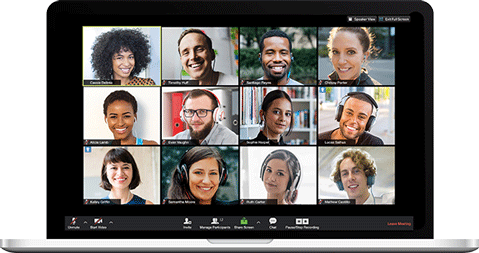
The MLIS program takes advantage of a flipped classroom model in which you will complete video coursework taught by MCE’s leading faculty throughout the week and then meet in small online class sessions weekly to discuss the week’s material.
Small live class sessions allow students to collaborate directly with faculty and peers while building practical skills applicable to modern information environments.
Students can access coursework, discussions and support services from any desktop or mobile device.
The Online Campus
Our online campus gives you access to coursework, resources, classmates and support 24/7 from any desktop or mobile device.
Live Class Technology
Live weekly classes are hosted via HD streaming video, which brings you face-to-face with faculty and peers in small collaborative groups.
Learn more about the experience of learning online at Morgridge College.
Jump to:
Curriculum
Careers
Admission
Tuition
Experience
Faculty
FAQs
Meet Our Faculty
Learn From Expert Information Science Practitioners
Our students learn from faculty members with experience in digital libraries, archives, metadata, scholarly communication and information access research. Faculty combine academic scholarship with professional practice across library, archival and information science environments.
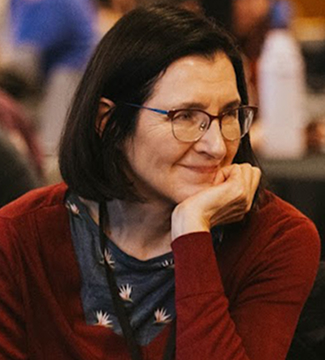
Krystyna K. Matusiak
Professor and Department Chair, Research Methods & Information Science
Research focus areas include digital libraries, digitization, data curation, visual information and cultural heritage preservation. Dr. Matusiak teaches courses in digital libraries, scholarly communication and digitization, and has extensive experience developing digital collections and community-based archival projects.

Spencer Acadia
Library and Information Science Faculty Member
Research and teaching interests include information ethics, community informatics, social justice in librarianship and the role of information systems within diverse communities.
Meet the rest of our faculty and learn more about their backgrounds.
Frequently Asked Questions
-
Yes, the Morgridge College of Education offers a library science track that is fully accredited by the American Library Association (ALA). Denver is home to one of approximately 50 online programs in the nation to hold this prestigious accreditation, ensuring your degree meets the highest professional standards. Because the program is held to the same standards as on-campus study, you receive a rigorous education that prepares you for leadership in the field.
-
The most important factor is ensuring your program is ALA-accredited, as this is the standard most employers require for professional roles. While the prestige of an institution can be a factor, many employers prioritize candidates who have practical work experience, strong professional networks and specific technical skills. Choosing a program like the one at the University of Denver allows you to gain a high-quality education while building the local connections necessary for your career.
-
For those aiming to become professional librarians, archivists or information specialists, this degree is typically a requirement for career advancement and higher salary potential. The field offers stable, meaningful work across diverse sectors including technology, government and academia. It is important to weigh the investment against your career goals to ensure the specialized training aligns with your professional aspirations.
-
The University of Denver offers a premium, high-touch experience that distinguishes it from lower-cost, high-enrollment alternatives. While more affordable programs may emphasize low tuition, the Morgridge College of Education focuses on personalized mentorship, small class sizes and a rapid completion timeline. This model is designed for students who value direct interaction with faculty and a structured, supportive environment.
-
Both degrees offer strong prospects, but they often cater to different career interests. A Master of Library Science (MLS) is a traditional path typically centered on roles in public or academic libraries. A Master of Library and Information Science (MLIS) often provides a broader foundation, preparing graduates for roles in digital information fields and data management.
-
Most professional positions require a master’s degree from an ALA-accredited program. Graduating from an accredited track significantly enhances your career mobility and provides greater flexibility in the types of jobs you can pursue. While an information science degree is valuable, checking for ALA accreditation is essential if your goal is to work in a traditional library setting.
-
A master’s degree in this field prepares you to organize, manage and preserve vital information for a variety of organizations. Beyond traditional library careers, graduates often find success as:
- Digital archivists
- Metadata specialists
- Information architects
- Knowledge managers
- Data curators
-
Denver offers specialized, ALA-accredited pathways that cover areas such as archival records, data management and digital libraries. While it features many of the same core subjects as other programs, formal concentrations like “School Library Media” are not explicitly listed in the online program description. The curriculum is designed to be versatile, allowing you to tailor your studies to public, academic or digital library roles.
-
The program is built for efficiency and can be completed in as few as 21 months. To earn your degree, you will complete 58 quarter credit hours of coursework and practical training. You can review the full Master of Library and Information Science curriculum to see how the credit requirements are distributed across the program.
-
The program primarily features synchronous classes, meaning you will meet with faculty and peers in real time via Zoom. This interactive approach emphasizes live discussion and collaboration, which is combined with on-demand activities you complete on your own schedule. This high-touch model ensures you stay connected to the university community regardless of your location.
-
The distinction often comes down to the focus of the curation. Library science typically emphasizes library-specific cataloging, user services and traditional curation. Information science tends to lean toward tech-driven data management, systems design and user experience. Many modern roles use these terms interchangeably, but an MLIS degree often bridges the gap between both worlds.
-
Admissions committees look for letters that highlight your intellectual curiosity and potential for academic success. Strong recommendations provide specific examples of your research abilities, technical skills and professional aptitude in managing information. Choosing references who can speak to your ability to work independently will strengthen your application.
-
To get the most out of your degree, prioritize hands-on experience through volunteering or internships. Networking through professional organizations like the American Library Association (ALA) and building relationships with faculty mentors can provide a significant competitive edge. Focusing on a specialized area, such as law or archives, can also help you stand out in the job market.
-
The best way to prepare is to gain practical experience in support roles or internships while you are still in school. You should also focus on enhancing your technical skills, particularly with ILS/LMS platforms and digital archiving tools. Tailoring your résumé to highlight relevant experience in information literacy and customer service will help you appeal to a wide range of employers.
-
Yes. Students may complete an optional Archiving sequence focused on records management, digitization and digital preservation.
-
Merit-based scholarships are currently available for eligible applicants.
University of Denver partners with 2U to support the delivery of these online programs. University of Denver has full control over the programs, including all core academic functions. Click here to learn more about 2U’s roles and responsibilities.
- American Library Association Accreditation FAQ. (n.d.). American Library Association. Retrieved May 20, 2026. ↩︎
- Librarians and Library Media Specialists. (2025). U.S. Bureau of Labor Statistics. Retrieved May 20, 2026. ↩︎
- Librarians and Library Media Specialists. (2025). U.S. Bureau of Labor Statistics. Retrieved July 17, 2026. ↩︎